This release is about one thing: a lot you bought years ago should still be that lot after it changes accounts or changes ticker.
A move between accounts keeps every lot
Moving a position from one account to another now hands each lot over exactly as it stands — its own cost basis, the fee that bought it, and the day it was acquired. The move itself is no longer a taxable disposal.
Until now a move closed every lot at the source and reopened the whole quantity as a single lot at the blended average cost, dated to the day it arrived. A later sale was then taxed on that average rather than on the lot it actually sold, the holding period restarted, and the cost basis was converted at the wrong day's FX rate — so a currency gain could be realized at the move and again at the sale.
Take 10 shares bought at 2 and 20 bought at 5, moved together, then 10 sold at 6. FIFO now picks the lot bought at 2 and realizes 40. The old blended basis of 4 realized 20.
Two new position columns, Acquisition Date and Age (days), show the day the lots were bought rather than the day they entered the account, and the Unit age (d) filter measures from the same day. Existing moves are recomputed, so where a move used to look like a sale, your realized gains and holding periods will shift.
Carry lots through conversions and spin-offs
A Convert or Spinoff now has a toggle, Carry acquisition date and lots to the target asset. With it on, each source lot becomes one target lot with its basis, fees and acquisition date, so a stock-for-stock merger or a spin-off doesn't reset the holding clock.
Capitally sets the toggle for you: on for a conversion with no price, a spin-off, or a split by Cost Basis %; off when you enter a Price (cost-basis), because a priced conversion is a sale. You can override it either way. Tax presets read the carried acquisition date for the opening leg, while wealth taxes still run from the day the receiving account got the lot.
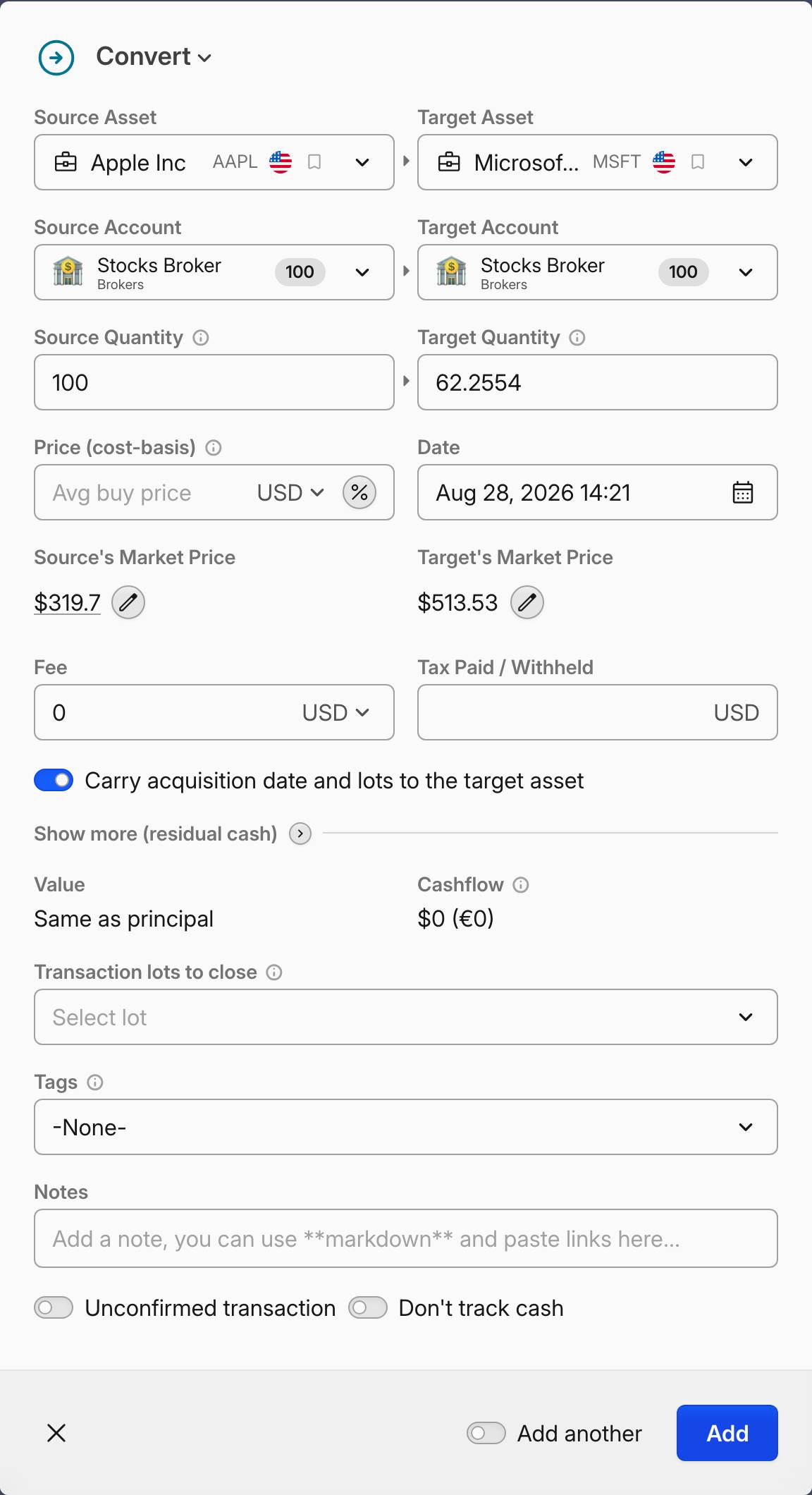 An unpriced conversion carries its lots, and Capitally turns the toggle on for you
An acquisition date on incoming transfers
A Transfer In gains an Acquisition date. Shares that arrive from a broker you don't track keep their original purchase date for the holding period, and a cost basis you enter is converted at that day's FX rate rather than the day of arrival. The date can't be later than the transfer itself. The Transaction import snippet reads it as Acquisition Date, so a broker file that reports it maps in one step.
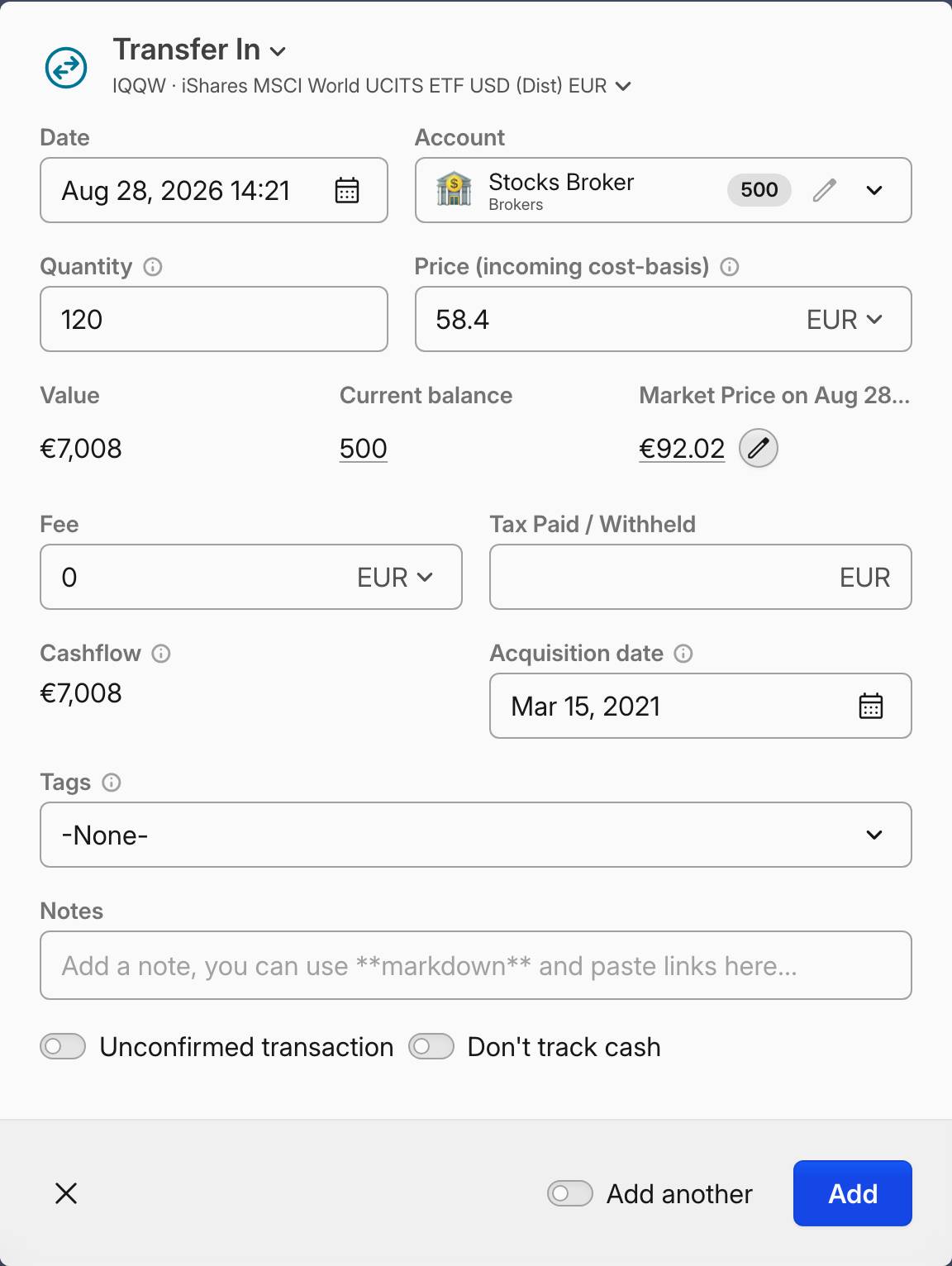 Transfer In with a receipt date and an earlier acquisition date
Residual cash on any conversion
Residual cash is now paid out on ordinary conversions and mergers, not only spin-offs. The cash comes out of the basis carried to the target, so the same value never shows up as both target shares and cash, and the cash slice is the taxable part of an otherwise tax-free conversion. 100 shares bought at 20, converted into 50 of the new company with 500 in cash, leave the target with a basis of 1,500 and 500 in your cash position — nothing realized on the shares.
A single
Move — same asset, two accounts, no price — is what carries lots and stays out of your tax report. Two one-sided Transfer transactions preserve your return, but they don't hand the lots over.See Transactions, Recording corporate events and Cost basis methods for the details, and Tax preset reference for how presets read the acquisition date.